
The CMO Conversation
/
The CMO Conversation
By: Johnny Anderson | Co-Founder of QusaiQ
The CMO has the shortest tenure of any role in the C-Suite.
The first time I saw this statistic was in the 2017 HBR article, with the somewhat apocalyptic title Why CMOs Never Last. According to HBR, this statement has remained true, most recently seen in a follow up article from them in 2025 asking if the CMO role needs an update.
The fundamental nature of this statistic, and the conversations that surround the reasons behind it, are both fascinating and frustrating. It appears that marketing continues to be one of the most misunderstood disciplines in the business world.
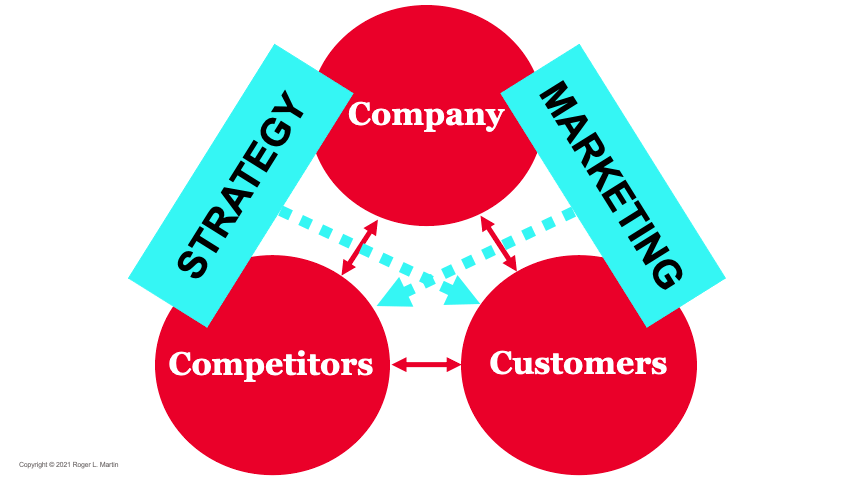
I have a belief: ‘marketing’ and ‘strategy’ can be synonymous. For any company that I care to build or work for, marketing should inform every function of the business design. It’s a big statement that is maybe not applicable for every type of business, but for any I’m involved with, it will be.
Roger Martin, in his book Playing to Win defines strategy as “an integrated set of decisions around what you will do and will not do, to position yourself on the playing field of your choice, and in such a way that you are destined to win.” He stresses this point in his video A Plan Is Not A Strategy. I implemented this concept at my recent company (acquired in 2023), and saw it move from an academic concept to the thing that drove an increase in enterprise valuation of the company by almost 4x. For every attempt I’ve made at putting this definition of strategy into a department, it sits firmly in the marketing department (or should). Having a marketing-savvy CEO doesn’t really change this conversation for me.
Copyright Roger L. Martin
Martin also comes right out and says that marketing and strategy have converged, in his 2021 article It’s Time To Accept That Marketing And Strategy Are One Discipline. I whole-heartedly agree.
Let me clarify one thing: I also believe that the tactical nature of marketing should never be undervalued. The science and art of how consistent messages are delivered into the minds of customers, and how that drives customer behavior, is incredible. The entire world around us has a Matrix-like underpinning of marketing tactics at play, the very nature of which makes them very difficult to tie to a single-point-in-time attribution measure. I also believe this is why marketing is so often undervalued by other members of the C-Suite, but this concept is for a different blog.
So, to tie all of this together, the role of CMO can be designed with a true understanding of the definition of strategy, as can the thing we call “the Marketing Department”. The CEO and CMO can exist in a non-subordinated and proactive relationship when it comes to strategy, with the CFO playing a reactive and supporting role focused on the planning of resources toward that strategy (this comment will most likely get me in a bit of trouble).
If you are a member of the C-Suite, ask yourself two questions:
“Do we have a clear definition of strategy that we use?” and then
“Where does our CMO fit into that definition?”
Based on the statistics related to CMO tenure, the answer may be eye opening.