
Scaling the Grind, Guarding the Craft: A Practical Blueprint for AI Efficiency in Marketing
/
If you have opened LinkedIn anytime recently, you have probably scrolled past someone claiming that a magical five-word prompt will replace your entire marketing department by next week.
Spoiler: it will not. If replacing an experienced marketing team were actually that simple, our jobs would have vanished eighteen months ago, and every corporate website would read like an instruction manual written by an overly energetic intern.
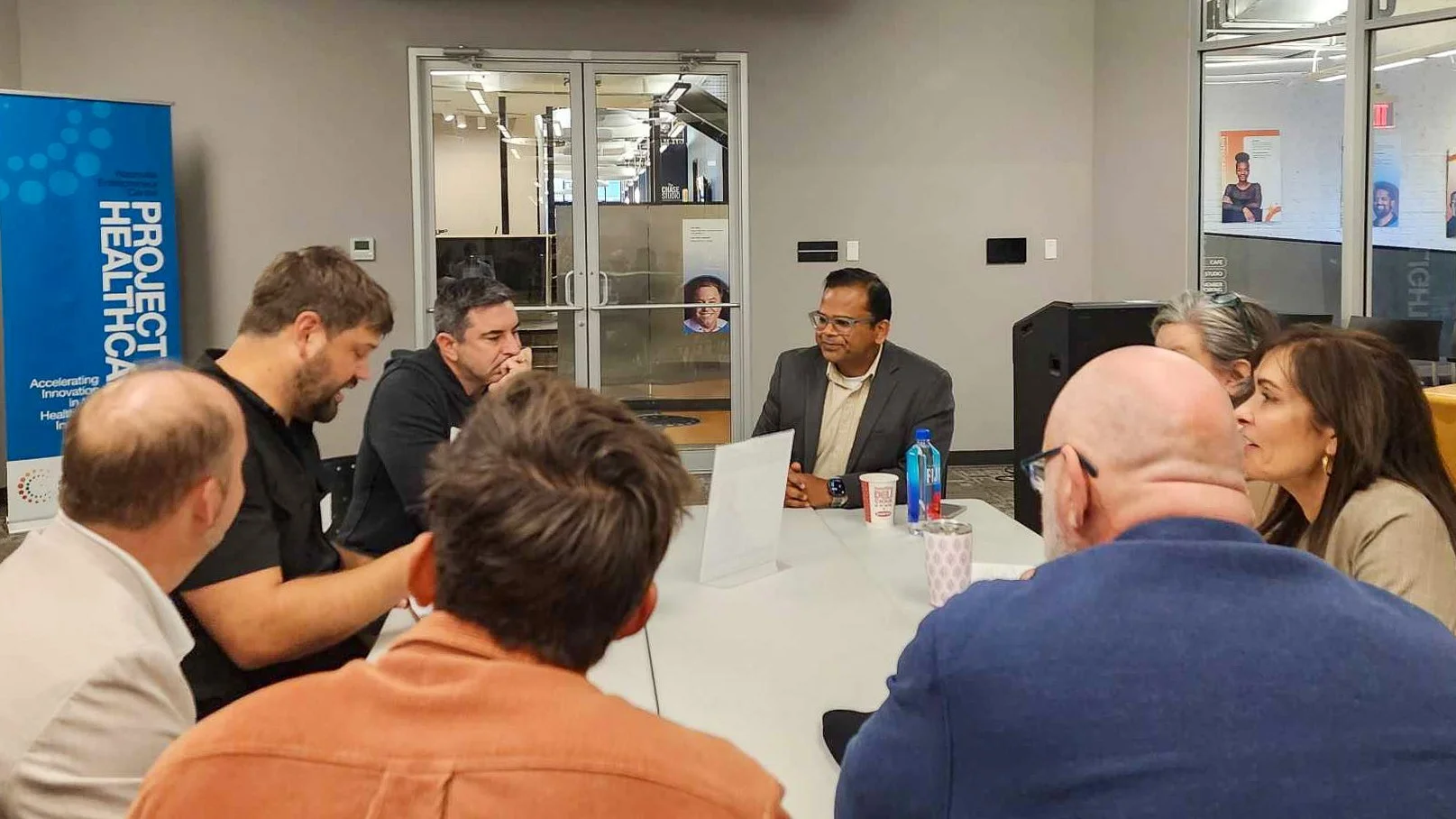
On November 4th, I had the pleasure of hosting two groups for a roundtable discussion on AI marketing efficiency during the AMA Nashville Thought Leaders Breakfast at the Nashville Entrepreneur Center (NEC). Through two sessions, we gathered about eight marketers at a time to talk through emerging marketing trends, real-world workflows, and hands-on tool integration. The crowd ebbed and flowed as coffee cups were refilled, but the conversations were honest, candid, and refreshingly devoid of Silicon Valley pitch decks.
Instead of debating whether artificial intelligence will rule the world in three years, we sat down over breakfast to share what is actually moving the needle, where tools fall flat, and how marketing professionals can evaluate automation without breaking brand trust.
Here is my personal take on the perspectives, operational experiments, and practical marketing tips that came out of those discussions.
Evaluating Where Automation Delivers Measurable Value
One of the loudest points of consensus across the tables was that chasing every shiny new tool on the market is the I-65 express lane to wasted budgets and distracted teams.
Every software vendor promises a 10x productivity leap. But around our tables, the reality was much simpler: that value only exists if the tool eliminates a genuine bottleneck instead of handing your team another administrative chore. To genuinely increase brand awareness and support sustainable growth, automation must solve operational friction.
At our tables, the wins weren't sweeping overhauls. They were tactical, grounded, and specific:
Pipeline & Prospecting Research: Attendees lean on tools to quickly assemble prospect profiles, review account histories inside their CRM, and draft personalized outreach templates.
Technical SEO & Data Audits: Marketers running technical audits automate schema checks, flag site errors, and distill dense, multi-tab spreadsheets into clear takeaways.
Location & Directory Audits: One marketer shared how automation maintains dozens of local clinic directories, wiping out hours of manual data entry every month.
Faster Outlines & Editorial Drafting: A publishing leader trained models on past issues to map out first-round outlines and stress-test angles, turning a weeklong grind into a half-day sprint.
Low-Code Intake Workflows: Another marketer paired Google Workspace Apps Script with Google Gemini to standardize project intake forms, transforming messy client briefs into clean, structured briefs so the team can focus on strategy rather than copying and pasting requirements.
The recurring theme was not that one specific tool fits everyone. Whether people favored ChatGPT, Claude, Copilot, Perplexity, or native features in Salesforce, success came down to identifying high-friction, repetitive tasks and testing small improvements rather than attempting a total overhaul on day one.


Creative Originality vs. AI Dead Giveaways
One of the liveliest exchanges across both sessions tackled creative quality. Let’s be honest: AI doesn't have an opinion. By design, large language models predict, combine, and remix existing patterns. They cannot dream up lived human experiences, nor can they possess authentic taste or build brand preference.
When teams feed a vague prompt into a model and accept the first output, the result is painfully recognizable. We have all seen the dead giveaways across the web: hollow buzzwords ("tapestry," "delve," "game-changer") and 800 words of filler that say absolutely nothing.
Roundtable participants shared several core marketing best practices they use to protect creative integrity while still using AI to accelerate production:
Use AI to Build the Scaffolding: Lean on tools for structural heavy lifting like rough slide deck layouts, session outlines, or rapid research briefs. Let the machine assemble the frame; keep the actual storytelling in human hands.
Feed Concrete Voice Examples and Negative Constraints: If you want a tool to produce a usable draft, give it your audience personas, three past writing samples that hit the exact tone you want, and an explicit list of stylistic phrases to avoid.
Run Structured Brand Checks: Before reading a draft, prompt the tool to evaluate its output against specific guidelines to strip out passive voice, unsupported buzzwords, or generic phrasing before any copy reaches an editor.
Keep Humans at the Steering Wheel and the Finish Line: The consensus was unanimous. AI is useful for accelerating analysis, formatting, and initial drafts. Human beings must still provide the original strategy, context, and final editorial scrutiny.
Audiences are smart. They can tell when content has been churned out by a machine that had nothing real to say, and nothing erodes hard-earned brand equity faster than sounding like a bot.
Practical Data Security and Commonsense Governance
Security and privacy brought intense discussion, especially from marketers handling sensitive accounts in healthcare, finance, or public sector environments.
When leadership stalls on setting clear AI policies, teams don't stop using the tools. They just quietly switch to personal accounts on their phones to get their work done. Most aren't trying to cut corners; they're trying to hit deadlines. But pasting raw customer records or unreleased financials into an open prompt puts client trust and enterprise security at serious risk.
The participants highlighted several straightforward habits that Nashville marketing teams can implement immediately:
Anonymize Data Before Prompting: Strip out client names, patient identifiers, unreleased financial figures, and sensitive internal details. If the information is not fit for a public billboard, it should not go into an open prompt window.
Isolate Data Streams: Intentionally filter website analytics to strip sensitive user info before passing data into reporting engines, while keeping AI tools blocked from scanning company emails and raw client databases.
Establish Transparent Departmental Rules: A lightweight, practical team agreement beats a buried corporate PDF every single time. Clarify which approved tools exist, which tasks allow automation, and where confidential data is strictly off limits.
Check Your Privacy Toggles: Make it a baseline policy to check whether software providers use team inputs to train public models, and make sure data sharing and model training settings are toggled off by default.
Building Buy-In and Managing Tool Volatility
Handing your team a login to a new software platform does not equal adoption. In fact, if employees feel that adopting a tool is a quiet audition for their own replacement, resistance is the natural reaction.
Our tables discussed several realistic avenues for building organic buy-in across marketing departments:
Appoint an Internal Guide: Having an enthusiastic team member test updates, surface helpful prompt formulas, and answer questions lowers the barrier for hesitant teammates.
Target the Work People Dislike First: Rather than forcing creatives to write their favorite pieces with a chatbot, start where enthusiasm is lowest. Have the tool clean up messy spreadsheets, pull transcripts into bulleted takeaways, or assemble basic presentation decks. Whatever their least favorite part of the day is, start there.
Share Workflows Openly: Walking through a ten-minute screenshare showing how a tedious two-hour administrative task was reduced to fifteen minutes wins over skeptics faster than any theory or mandate.
We also discussed the unpredictable side of AI: fluctuating model behavior. Staying resilient doesn’t mean jumping from one shiny app to the next. It means keeping your core workflow portable: document your prompt structures, keep your source data clean, and know your fallback plan so your day doesn't screech to a halt when an API shifts or an algorithm updates.
Real Marketing Efficiency Buys You Bandwidth
AI cannot replace genuine human connection, strategic judgment, or authentic brand personality. What it can do, when applied intentionally, is reclaim hours of administrative grind. It buys your team the mental bandwidth to scale your creative thinking, test fresh marketing ideas, listen more closely to your target audience, and deliver work that actually drives results.
Navigating this shift isn't something leaders should do in silos. Investing in ongoing professional development in Nashville and participating in local networking makes all the difference. When we sit down together at chapter networking events to swap actual workflows instead of vendor hype, it becomes much easier to see the difference between tech that builds real leverage and noise that drains our teams.
Put Practical AI to Work
Navigating marketing technology works best when we compare notes openly, practitioner to practitioner.
If you're in Middle Tennessee: Get in the room with us. Check out the AMA Nashville Events Calendar for upcoming executive roundtables, panels, and workshops.
If your team needs operational clarity: If you're ready to implement AI workflows that protect your brand equity and free up creative bandwidth, let's talk at Brand Mark Digital.
What is the one AI workflow that actually moved the needle for your team this month? Let’s talk about it at the next breakfast, or connect with us on social to share your take!

About Jennifer Renshaw
Jennifer Renshaw is the Founder & CEO at Brand Mark Digital and Past President of AMA Nashville. With over 15 years of digital marketing experience and certifications from the Marketing AI Institute and ELVTR, she is a frequent speaker and workshop leader on practical AI applications in business. Jennifer is passionate about helping brands cut through tech hype to harness AI for scalable growth and innovation.